Supporting Systems & A.I Experiments
AI Flyer Automation — Make.Com
A self-correcting AI workflow designed to explore how structured inputs, validation, and feedback loops can produce reliable creative output.
I built this system alongside my core product work to better understand how AI agents can be orchestrated as part of a larger product system — not just used in isolation.
The workflow translates structured user inputs into design-ready prompts, generates visual assets, evaluates quality automatically, and retries generation until a defined standard is met. Approved outputs are then delivered directly to the end user.
I use this system both for real promotional requests (event and marketing flyers) and for generating creative assets used across my own projects.
Concepts explored:
Converting user intent into structured system inputs
Designing automated feedback and retry loops
Balancing creative flexibility with quality constraints
Using AI as a component within a broader workflow, not a standalone tool
Status: Supporting system — actively expanding
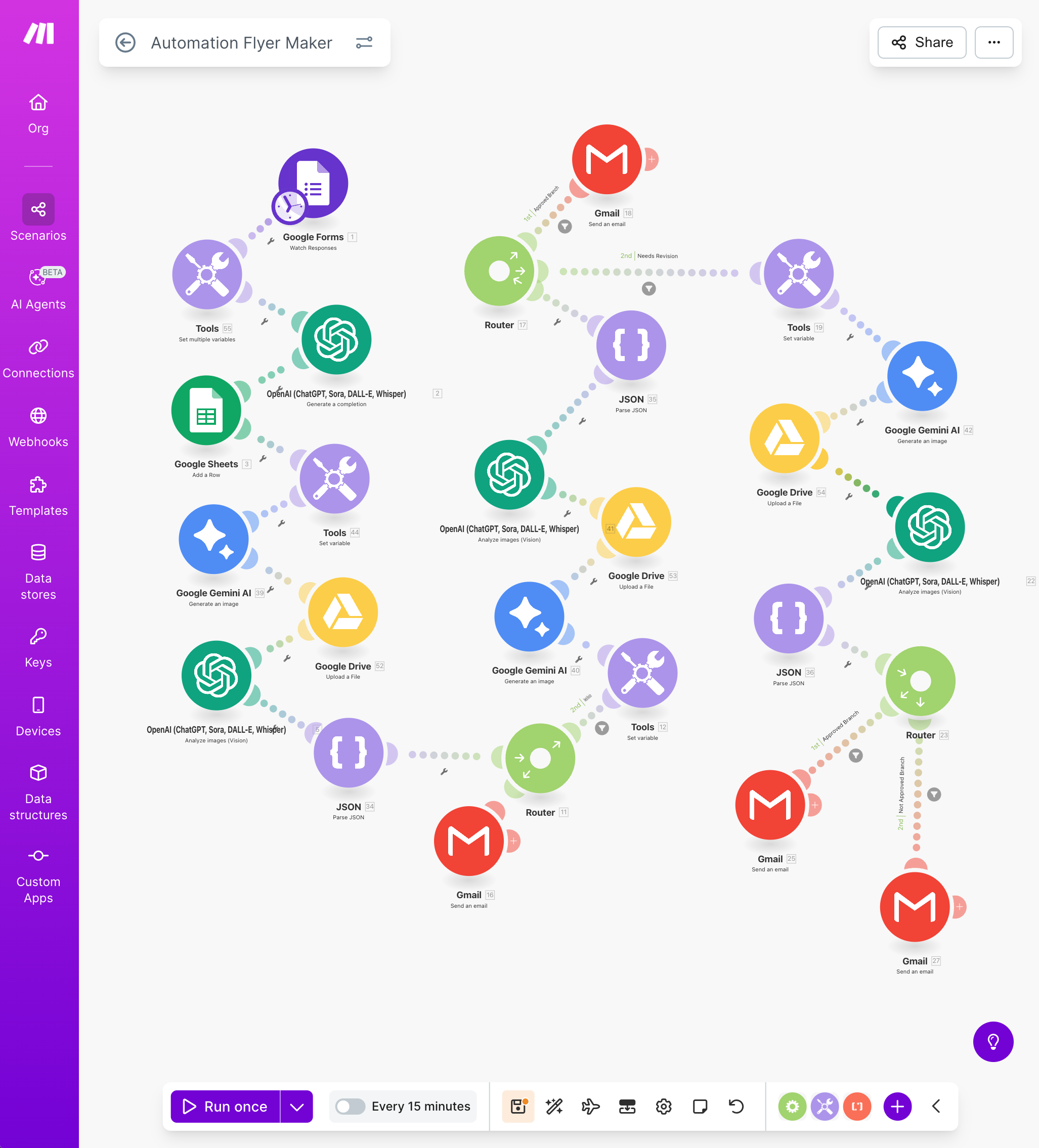
Small system I build alongside my flagship product to learn faster, iterate more intentionally, and deepen my understanding of AI-driven workflows.
Jarvis — Personal AI Career Command Center
Jarvis is a local AI operating system I built to explore how AI agents can support real execution workflows beyond one-off chat.
The core module is the Career Protocol: a private AI command center for managing career execution through structured memory, opportunity tracking, Gmail-supported evidence, networking context, action queues, and approval-gated workflows.
The system includes protocol-based workflows for planning, reflection, weekly review, and career execution. Each protocol pulls from saved context, active goals, open loops, prior updates, and structured operating state so the assistant can respond with more relevant recommendations over time.
For the Career Protocol, I built a dashboard with pipeline tracking, career chat, read-only Gmail evidence, structured career updates, networking records, daily priority recommendations, and local draft/action management. The system can summarize selected evidence and suggest next actions, but it cannot send emails, modify Gmail, apply to jobs, or update important files without user review.
This project helped me explore how memory, context design, privacy constraints, and human-in-the-loop approval flows make AI agents more useful and trustworthy in real workflows.
System highlights:
Memory + Operating State
Jarvis maintains structured context across protocols, saved updates, open loops, and current career state so recommendations stay grounded over time.
Read-Only Evidence Layer
Career Protocol can search selected Gmail metadata and summarize approved threads as evidence without exposing raw inbox data or modifying email.
Approval-Gated Actions
Every meaningful write goes through review first: career updates, action cards, local drafts, networking records, and saved logs require user confirmation.
Local-First Privacy
The system runs locally, keeps private files out of the public repo, and avoids autonomous external actions like sending emails, applying to jobs, or changing calendar events.
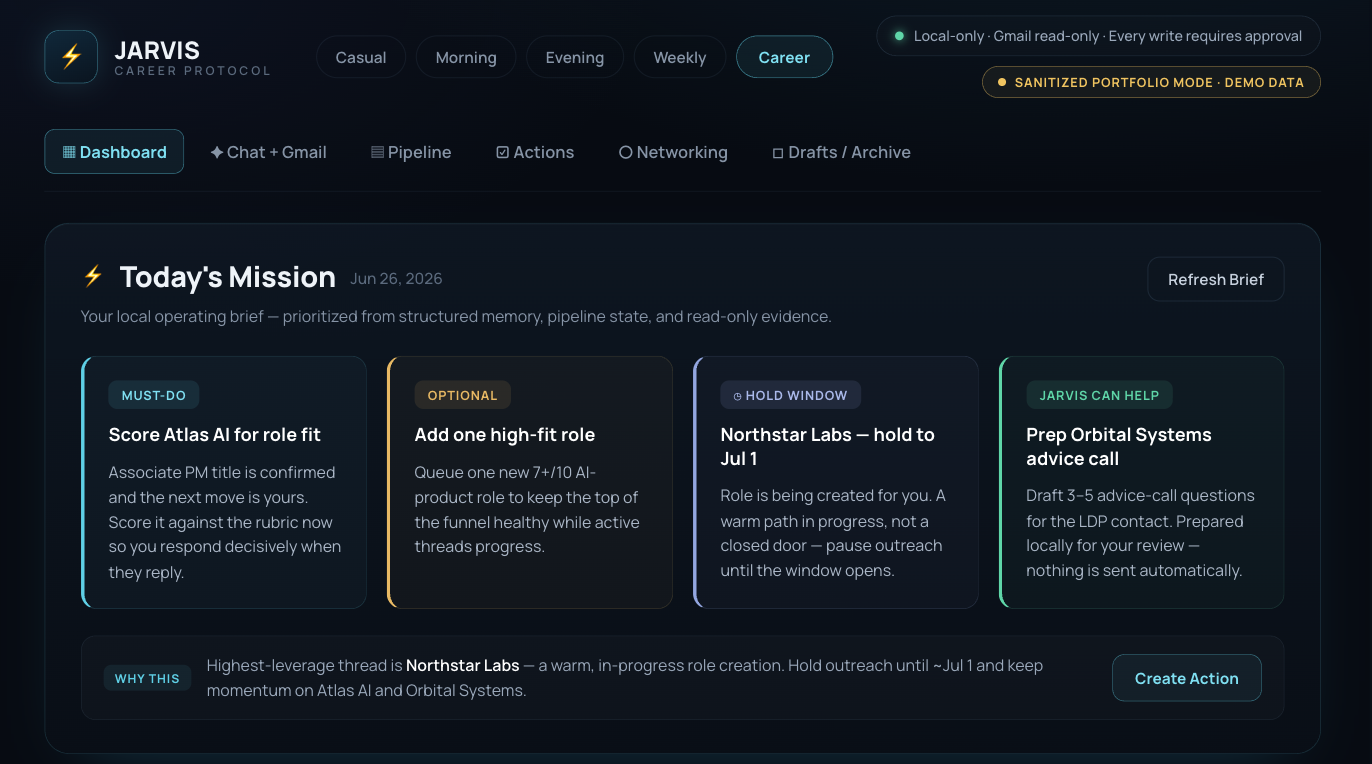
Daily Mission view from the Jarvis Career Protocol dashboard. The system prioritizes the day’s highest-leverage career action using structured memory, pipeline status, and read-only evidence while keeping all actions approval-gated.
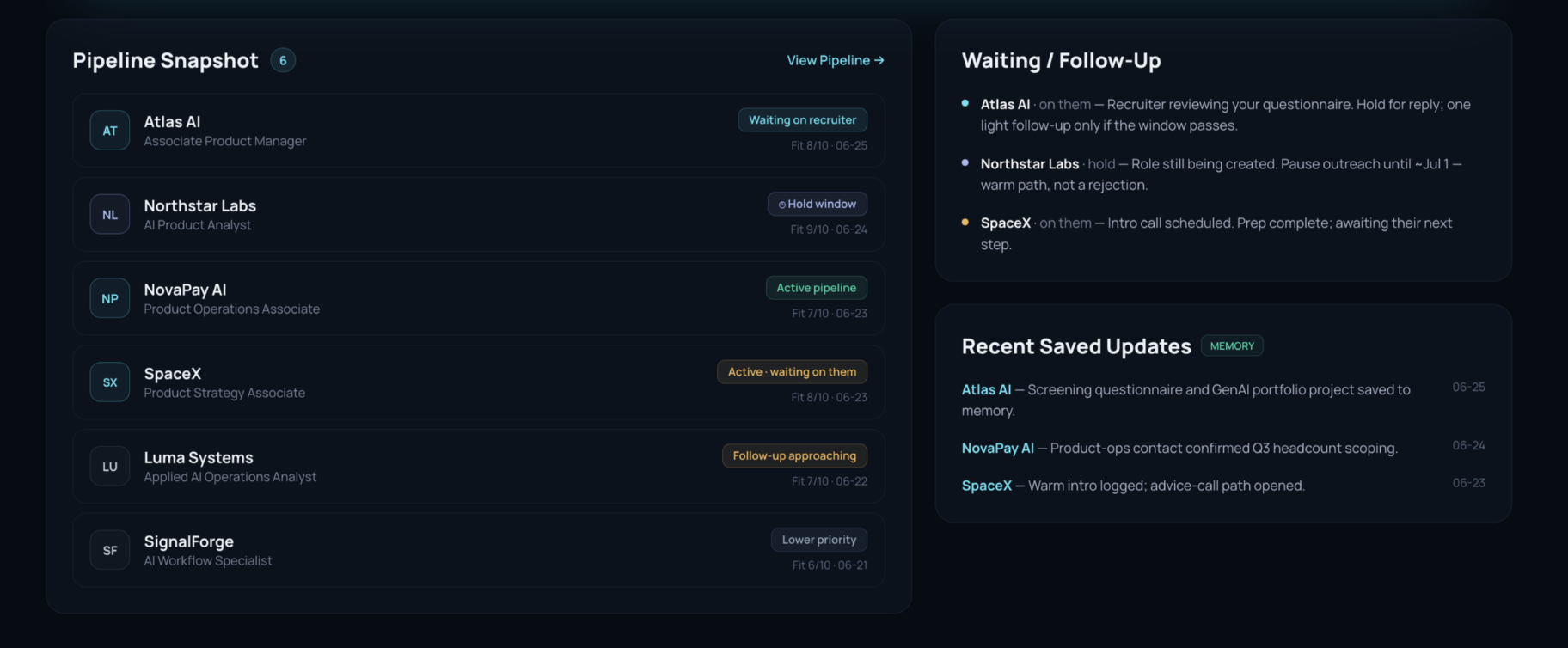
Pipeline and memory view showing opportunity status, follow-up timing, and saved career updates using sanitized demo data. Companies, roles, contacts, and email examples shown are fictional portfolio data.
Campaign Risk Copilot
AI-assisted campaign finance and reconciliation workflow
Campaign Risk Copilot is a synthetic-data prototype built to show how AI can support finance and operations teams reviewing campaign performance, invoice gaps, margin pressure, underdelivery, attention signals, and supply-quality risk.
The workflow takes campaign-level CSV or JSON data, maps messy source columns into a standard schema, validates which analyses the data can actually support, runs deterministic finance calculations, ranks campaigns by review priority, and generates an optional AI memo from the computed results.
The core design principle is simple: code does the math, AI explains the results. Financial metrics such as expected revenue, invoice gap, delivery rate, gross margin, and risk flags are calculated deterministically in TypeScript. The AI layer only receives sanitized computed results and turns them into an analyst-style summary.
This project was built as a proof-of-work example of how focused AI workflows can reduce spreadsheet-heavy review processes and help teams quickly identify where human review is needed.
What I Built
Designed a 5-step campaign review workflow: Input Data → Map Columns → Validate → Analyze → Brief
Built deterministic risk logic for invoice gaps, margin pressure, underdelivery, attention signals, and supply-quality flags
Added data sufficiency checks so missing fields return *N/A**, not misleading zeroes
Integrated an AI memo layer that summarizes only sanitized computed results
Deployed a password-gated live demo through Vercel
Designed an enterprise-style interface with KPI cards, risk-ranked tables, campaign detail panels, and executive summaries
Tech Stack
Next.js · TypeScript · Tailwind CSS · Zod · OpenAI API · Vercel · GitHub · Claude Code · Claude Design
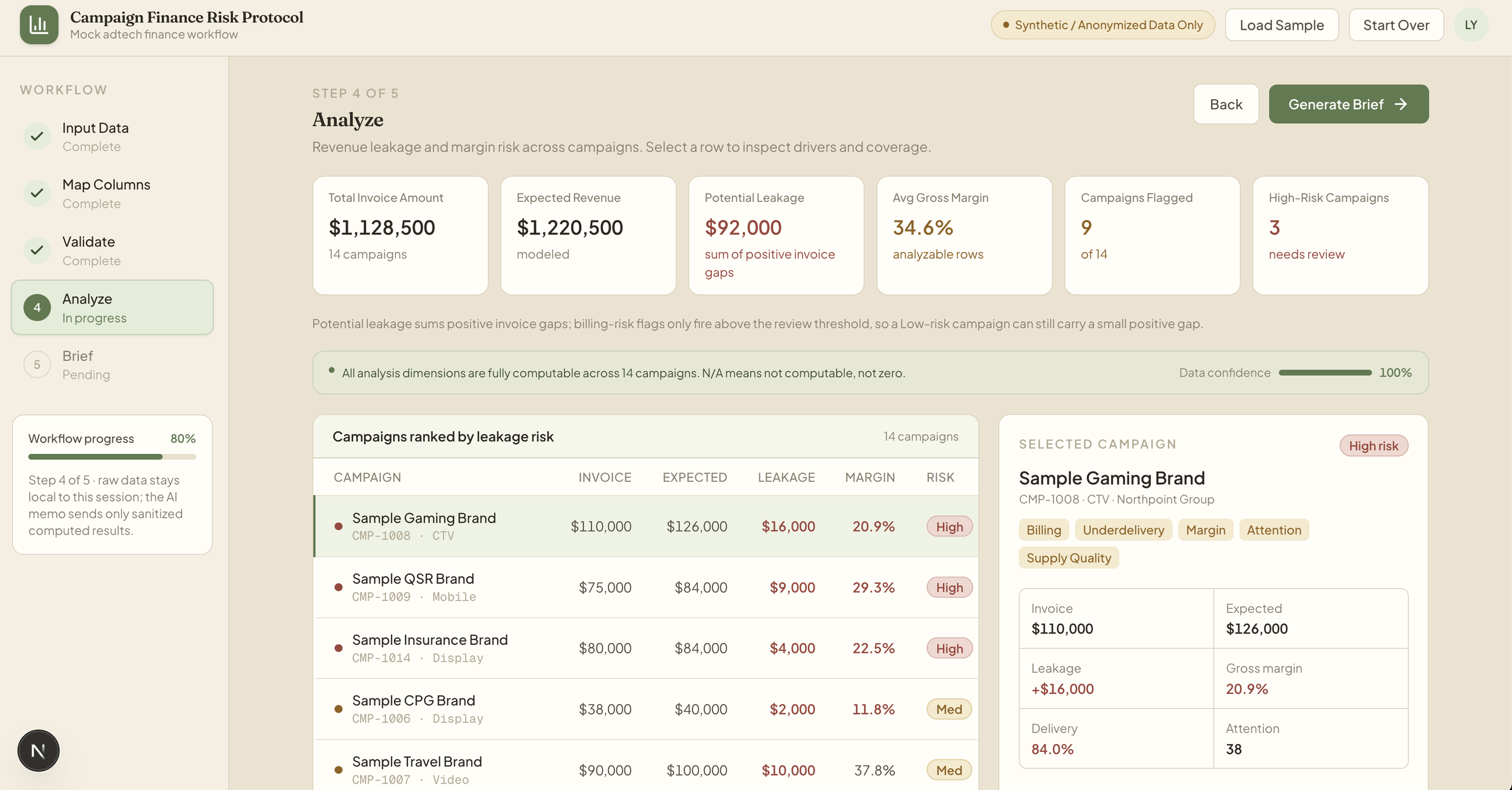
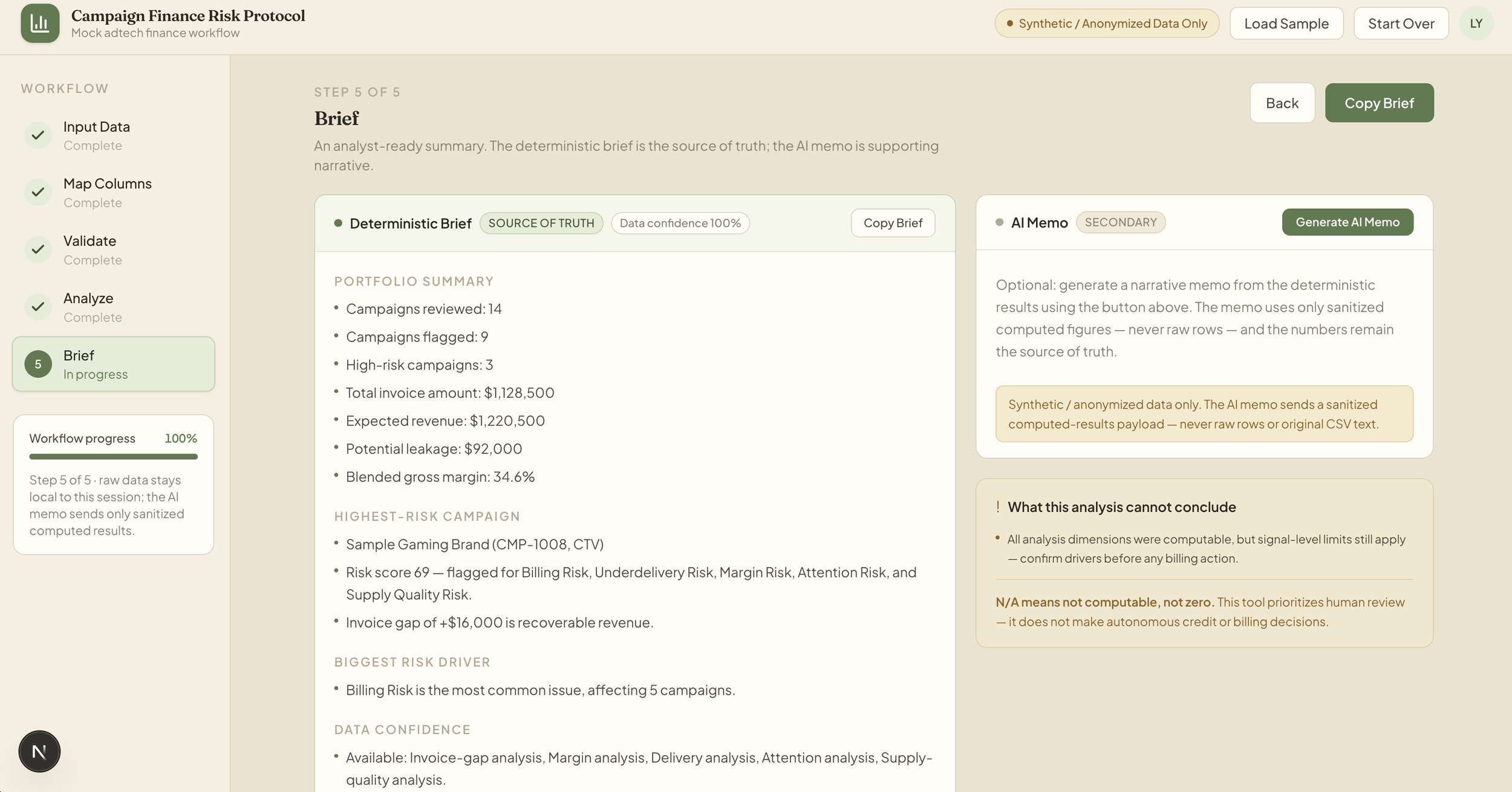
The Brief step turns the analysis into an executive-ready summary. The deterministic brief remains the source of truth, while the optional AI memo explains the computed results using only sanitized outputs from the risk engine.